


e1280s Select Universal ECU
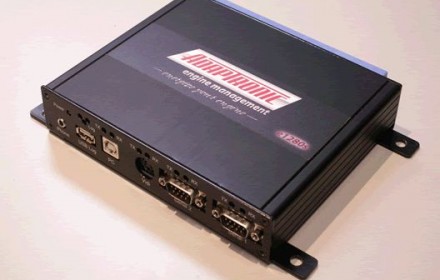 |
|
| [ Learn more... ] |
Notes:
For the 2GRFE engine, we make the following recommendations:
1. The 1280 must be wired into the factory loom. External components required are a loom (short or long, depending on application) – loads for the factory ECU and an OBD interface to avoid fault codes / engine check light appearing.
2. If you’re doing your own tuning, we recommend adding a wideband lambda sensor.
3. In this sort of application, we would suggest controlling the fuel and ignition with the aftermarket ECU, and allow the factory ECU to communicate with the instruments,control the electronic throttle and the anti-pollution gear. This is generally how an aftermarket ECU is wired into a modern car.
A cheaper, faster, but less flexible alternative is to use the 440 ECU:
 |
|
| learn more… |
Notes for 440 ECU installation on the 2GR-FE engine:
1. The factory ECU will need to control the variable valve timing, or at least both exhaust cams.
2. The factory ECU will need to control the electronic throttle.
3. The 440 has only 4 injector and 4 ignition outputs, so it will need operate in waste spark ignition and semi-sequential injection.
4. As with the other piggyback implementations, the factory ECU will need loads on the injector / ignition outputs to prevent fault codes, and and OBD interface to prevent the check light from coming on.
5. If you’re doing your own tuning, we recommend adding a wideband lambda sensor.

